
Reviewed · STANLEY PARK TOURS
Spoken Treasures: Stanley Park Indigenous Walking Tour
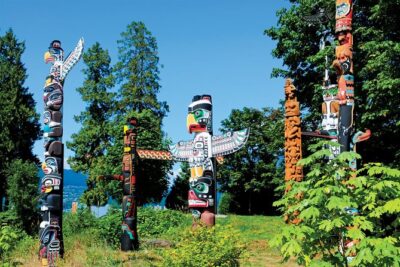
Stanley Park looks familiar to many Vancouver visitors: trees, seawall, water, and the famous totem poles. This tour changes the way you read that setting. An Indigenous Cultural Ambassador connects the park to First Nations history, ceremony, land use, and the stories behind the carved figures.
I like the small maximum of 10 people, which gives you room to ask real questions. I also like the 1.1 km route, long enough to see the park and enjoy the seawall without turning the afternoon into a workout. The main catch is the limited schedule and weather policy, so you need to plan around the tour’s Tuesday and Wednesday operation in July and August.
Key points to know
- The 1.1 km seawall walk ends at the Stanley Park Totem Poles, so the route has a clear finish.
- An Indigenous guide leads the experience, offering First Nations history and cultural context rather than a standard park overview.
- The group is limited to 10 people, making it easier to ask about ceremonies, masks, carving, and local nations.
- Guides such as Shae and Patrick bring different strengths, with Shae praised for connecting stories to the land and Patrick noted for answering detailed questions.
- The tour lasts about 1 hour and 15 minutes, with a 2:00 pm start.
- Hot tea may be served at the end, a welcome touch after the walk, especially in wet weather.
Seeing Stanley Park Through Indigenous Eyes
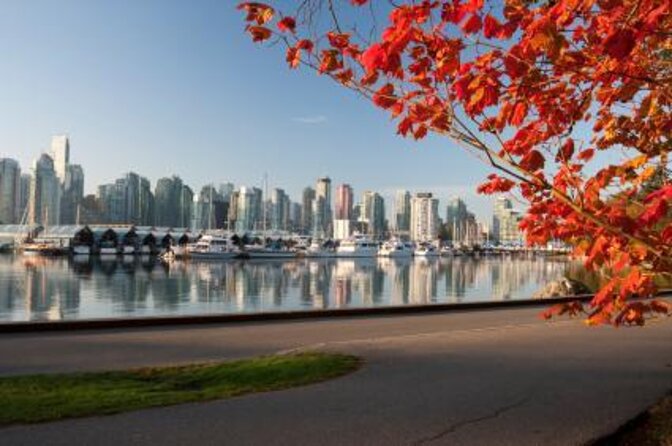
The strongest part of Spoken Treasures is its point of view. You are not simply being shown a famous Vancouver park. You are being asked to consider the land through Indigenous stories, memory, and cultural knowledge.
The route follows the seawall for about 1.1 km. That keeps the walk manageable, but it still gives you time to notice the setting and hear how Stanley Park fits into the larger story of Vancouver. The guide discusses Indigenous history in the park, local First Nations, the use of trees, the meaning of ceremony, and the stories connected to the totem poles.
That approach matters because Stanley Park can be easy to experience as scenery alone. You may focus on the water, trees, and city views, then leave without knowing much about the people whose cultures are represented at the park’s best-known Indigenous site. This tour puts those stories first.
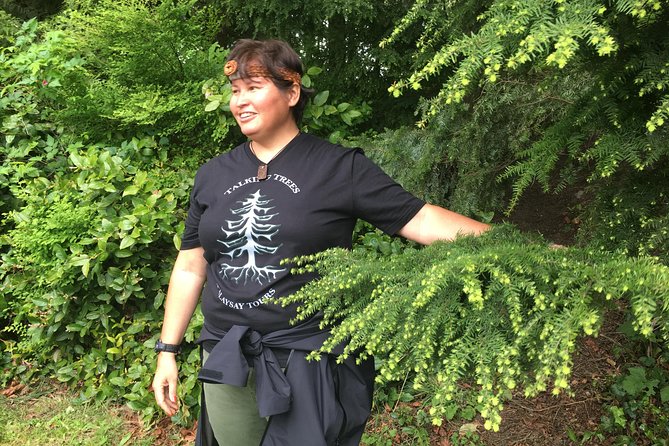
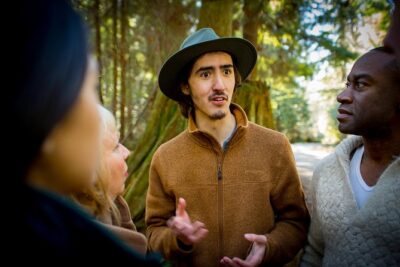
The guides are called Indigenous Cultural Ambassadors. That title is useful: you can expect an interpreter and storyteller, not just a person leading you from one point to another. Shae has been praised for helping people understand First Nations history, culture, and present-day challenges. Patrick has been praised for his clear answers about local nations, cultural practices, and the figures carved on the poles.
More Stanley Park tours:
- Vancouver City Sightseeing Tour: Granville Island & Stanley Park
★ 4.5 · 1,782 reviews - Vancouver Tour: Stanley Park, Granville Island & Capilano Bridge
★ 4.5 · 1,778 reviews - The Stanley Park Bicycle Tour by Cycle City Tours
★ 5.0 · 785 reviews
The 2:00 pm Start and Meeting Point
The tour begins at 1100 Stanley Park Drive at 2:00 pm. It ends at 1976 Stanley Park Drive, at the Stanley Park Totem Poles. That point-to-point setup is worth noting. You do not finish where you started, so plan your next move from the totem poles rather than back at the meeting point.
The tour includes the guided walk, but not private transportation. Stanley Park is near public transportation, which helps if you are reaching the start without a car. Since the route takes place inside the park, allow yourself enough time to arrive at the correct address and get settled before the 2:00 pm departure.
A mobile ticket is provided, and confirmation comes at booking. I would keep the ticket easy to access on your phone, since this is a walking tour with no need for printed material.
The meeting and ending points are both on Stanley Park Drive, but they are not the same location. That small detail can save you a needless backtrack after the tour. If you have another timed activity later in the day, leave room for the walk back to your transport or for finding your way out of the park.
Walking the Seawall for 1.1 Kilometres
The route is a stroll rather than a hard hike. You walk along the seawall with the guide, stopping as the stories require. The exact rhythm depends on the group and the questions people ask, but the short distance allows the cultural material to remain the focus.
I like this format because it gives the stories a physical setting. A discussion about trees can happen among the trees. A conversation about the park’s past can take place while you are walking through it. The guide can point to the land around you instead of presenting everything as an abstract lecture.
The walk also suits people who want more than a quick stop at the totem poles. You will not spend the full experience standing in front of the carvings. You first move through Stanley Park and hear about Indigenous connections to the area, then arrive at the poles with more context.
Wear shoes suited to a normal outdoor walk and dress for changing weather. The tour requires good weather, and it can be canceled if conditions are poor. If that happens, you are offered a different date or a full refund. The weather policy is sensible, but it means this is not the best activity to leave until the final day of a tightly scheduled visit.
What the Guide Adds to the Experience
The quality of this tour depends heavily on the person leading it. That is not a criticism. It is simply the nature of a small storytelling walk. With only 10 people, the guide becomes the center of the experience.
Shae has been praised for creating a strong connection between the group, the land, and the difficult parts of First Nations history. That last point is important. This is not a feel-good park tour that skips over cultural challenges. The focus includes history, culture, and the problems Indigenous communities have faced and continue to face.
Patrick has been praised for his patience with questions. One question concerned masks used during ceremonies and the faces shown on totem poles. Patrick explained that the figures represented ancestors, with the eldest figure at the bottom and later generations placed above. That exchange shows the kind of conversation the small group can support.
You should feel free to ask questions, as long as you do so respectfully. The experience is well suited to people who want to understand rather than simply photograph the poles. You may arrive with questions about symbols, carving, ceremonies, local nations, or the use of plants and trees.
One guide has also been described as a former educator. That background can make a difference if you prefer an organized explanation rather than a series of disconnected facts. The tour is short, so a good guide must make each stop count.
More walking tours in Vancouver:
- Gastown Historic Walking Food Tour
★ 5.0 · 1,863 reviews - Vancouver Lost Souls of Gastown Walking Tour
★ 5.0 · 1,273 reviews - A Wok Around Chinatown: Culinary and Cultural Walking Tour Led by a Chef
★ 5.0 · 610 reviews - The Forbidden Downtown and Gastown Walking Tour
★ 5.0 · 476 reviews
Arriving at the Stanley Park Totem Poles
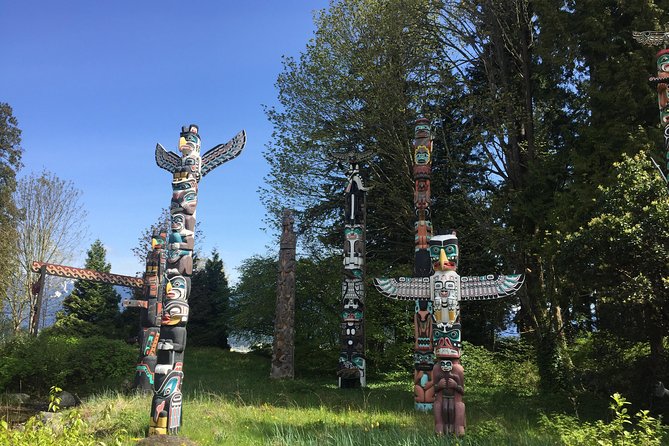
The tour concludes at the Stanley Park Totem Poles, the most recognizable Indigenous cultural site on the route. Here, the guide turns to the carvings and the Indigenous peoples who made them.
The poles are not explained as simple decoration. You learn about their stories, their makers, and the role of ancestral figures. The discussion can help correct a common mistake: treating every carved figure as a god or a generic symbol. The explanation given on this tour presents the faces as ancestors, with their placement carrying meaning.
The final stop works well because you have already spent time hearing about the park and Indigenous presence in Vancouver. By the time you reach the poles, you have a framework for asking better questions. You can look at the carvings with more care instead of taking a quick picture and moving on.
The end point also gives the tour a clean shape. You begin with the park and seawall, then finish with a focused conversation about the poles. If the subject interests you, you can remain in the area afterward and look again at the carvings using what you have learned.
Learning About Trees, Ceremony, and Daily Life
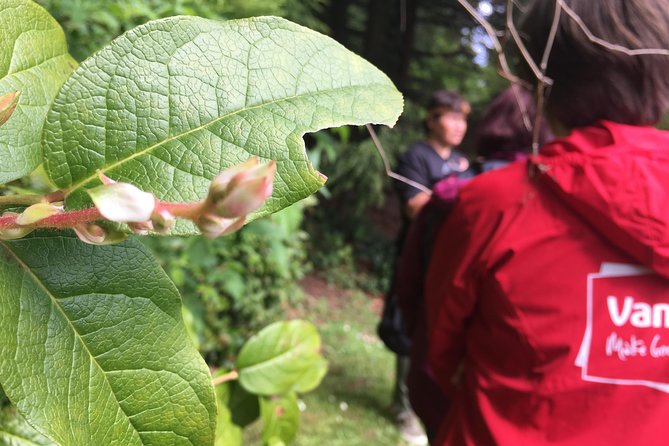
The material is broader than totem poles. The walk can include the use of trees by Indigenous peoples, the history of the land, ceremonial masks, and images of how the area looked in earlier times.
That breadth is one reason I would choose this tour over a standard sightseeing walk. You get an introduction to living cultures and practical relationships with the land, not only a date-filled account of Vancouver’s past.
The experience can also raise complicated questions about cultural similarities. One participant connected the discussion of ancestral faces on poles with a similar tradition from northern China. That sort of exchange can be interesting, but it is best treated as a starting point for questions rather than a final answer about origins or migration.
The guide’s role is to explain the local Indigenous context. You can expect the conversation to stay connected to Stanley Park, Vancouver, and the First Nations represented in the area. That local focus keeps the walk grounded.
Why the Small Group Size Matters
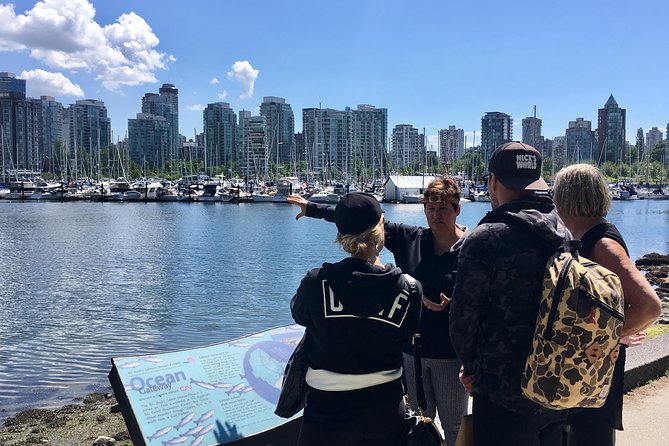
A group limit of 10 is one of the clearest reasons to consider this experience. Large sightseeing groups often make questions difficult. Here, the guide can respond to what interests your group, within the time available.
The small size also changes the tone. You are walking with an ambassador who can speak directly with you rather than projecting a script to a crowd. If you have wondered about the figures on the poles, the meaning of masks, or how trees were used, you have a better chance of discussing those subjects in a useful way.
There is a tradeoff. A small group makes the tour feel personal, but it also means fewer departure dates and limited availability. The experience is often booked well ahead, with an average booking lead time of about 35 days. If this is important to your Vancouver plans, book before your schedule fills.
The tour is offered in English. Most people can participate, but you should be comfortable with a walking experience outdoors for roughly 75 minutes.
Is $56.20 a Fair Price?
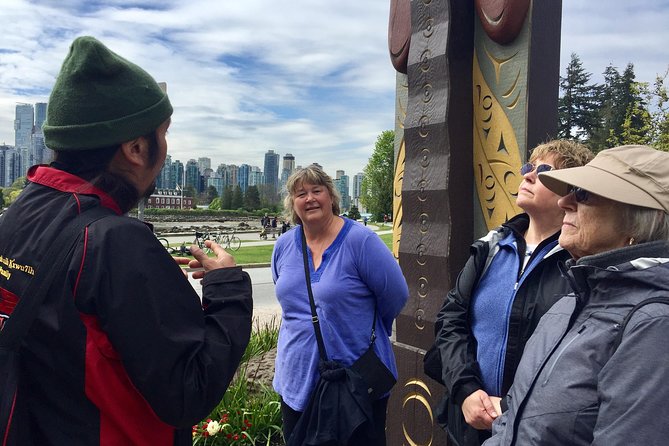
At $56.20 per person, this is not the cheapest way to see Stanley Park. You can walk the seawall and look at the totem poles without paying an admission fee. The price is paying for interpretation, cultural context, and a small group rather than access to the park itself.
That distinction is important. If you only want scenic views and a quick look at the carvings, you can explore independently. If you want to understand what you are seeing, the guided format offers more value.
The tour lasts about 1 hour and 15 minutes, which keeps the cost from becoming a full-day commitment. You get a focused introduction without giving up the rest of your afternoon. The included guide is the central value, and the small group makes the price easier to justify than a large, generic sightseeing tour.
The occasional cup of hot tea at the end is a pleasant extra, but it should not be the reason you book. The real value lies in the guide’s ability to explain Indigenous perspectives and respond to thoughtful questions.
Rain, Scheduling, and Other Practical Concerns
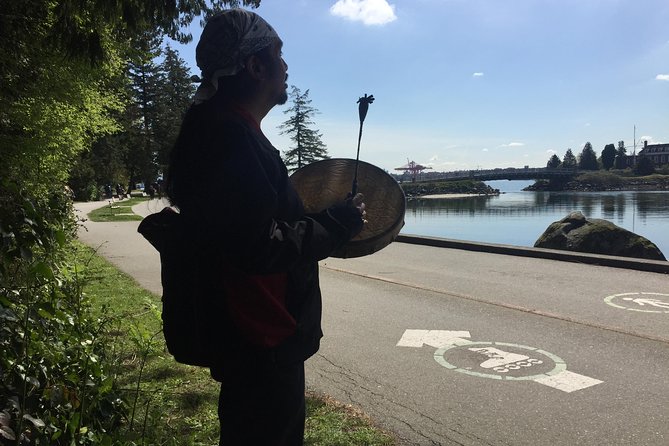
This is an outdoor experience, and weather affects it. The tour requires good weather, with a different date or full refund offered if poor conditions cause cancellation. You can cancel for a full refund up to 24 hours before the 2:00 pm start. Cancellations or changes inside 24 hours are not refunded or accepted.
The listed operation is limited to Tuesdays and Wednesdays in July and August because of health and wellness management during the stated summer period. Check the available date carefully before building your day around it.
The tour is near public transportation, but private transportation is not included. The mobile ticket and included admission to the guided experience keep the booking simple. The main planning task is getting to 1100 Stanley Park Drive on time and remembering that you finish at the totem poles.
Rain does not automatically mean the tour goes ahead. A wet-weather experience has taken place in the past, with discussion of trees, soil, the land’s earlier appearance, and the totem poles. Still, the current policy says poor weather can lead to a cancellation, so you should not assume the walk operates in every condition.
Who Should Book Spoken Treasures?
I would choose this tour if you want to connect Stanley Park with Vancouver’s Indigenous past and present. It is especially useful for first-time visitors who want cultural context before or during their visit to the totem poles.
It also suits curious families, couples, and solo visitors who prefer asking questions to listening silently in a large group. The short walk works well if you have limited time, and the 10-person cap gives the guide space to respond to the interests of the group.
You may want to skip it if you only want a fast scenic walk, dislike scheduled activities, or have no flexibility around the limited operating days. The price will also feel high if you are content to explore Stanley Park independently.
For the right person, though, Spoken Treasures offers something a self-guided walk cannot easily provide: a local Indigenous guide who helps you understand the people, stories, and cultural meaning connected to the place.
Should You Book This Stanley Park Tour?
Book it if the story behind Stanley Park matters as much to you as the view. The 1.1 km route is manageable, the group is small, and the finish at the totem poles gives the walk a clear purpose.
I would make room for it in a Vancouver itinerary, especially if you can book a Tuesday or Wednesday in July or August and have a weather backup. Go ready to listen, ask respectful questions, and treat the totem poles as more than a photo stop. That is where this tour earns its price.
FAQ
How long is the Stanley Park Indigenous walking tour?
The tour lasts approximately 1 hour and 15 minutes.
What time does the tour start?
The tour starts at 2:00 pm.
Where does the tour begin?
It begins at 1100 Stanley Park Drive, Vancouver, British Columbia, V6G 3B3.
Where does the tour end?
The tour ends at the Stanley Park Totem Poles, at 1976 Stanley Park Drive, Vancouver, British Columbia, V6G 3E2.
How far do you walk?
The guided walk along the seawall covers approximately 1.1 km.
How many people can join the tour?
The group has a maximum of 10 participants.
Is the tour offered in English?
Yes. The tour is offered in English.
Is transportation included?
No. Private transportation is not included, although the tour is near public transportation.
What happens if bad weather cancels the tour?
If the tour is canceled because of poor weather, you are offered a different date or a full refund. You can also cancel up to 24 hours before the start time for a full refund. Cancellations made less than 24 hours before the experience are not refunded.
Recently reviewed around Vancouver
- West Coast Party Crawl – Route B★ 4.4 · 13 reviews
- Vancouver: Morning Kayak & Seal Cruise★ 4.9 · 6 reviews
- Vancouver: Zodiac Whale Watching Tour from Granville Island★ 4.6 · 6 reviews
- West Coast Party Crawl – Route A★ 4.5 · 9 reviews
- Vancouver: Self-Guided Smartphone Walking Tour of Gastown★ 4.0 · 15 reviews
- Vancouver Waterfront Guided Bike/E-Bike Tour★ 5.0 · 3 reviews
- Vancouver: Waterfront Sightseeing Tour – City and Waterfall★ 4.9 · 8 reviews
- Vancouver UNESCO Biosphere Reserve Wildlife Scenic Boat Tour★ 5.0 · 5 reviews
Stanley Park Tours, compared.
Vancouver City Sightseeing Tour: Granville Island & Stanley Park
Read our review →
Vancouver Tour: Stanley Park, Granville Island & Capilano Bridge
Read our review →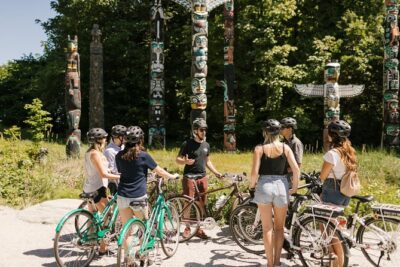
The Stanley Park Bicycle Tour by Cycle City Tours
Read our review →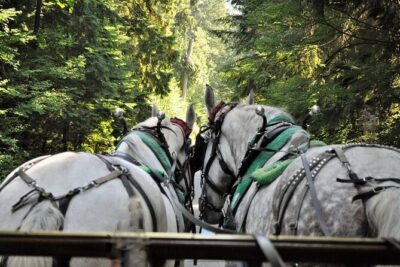


Sunset Bus Tour: Stanley Park & English Bay Photostops
Read our review →Browse the lists this tour appears in