
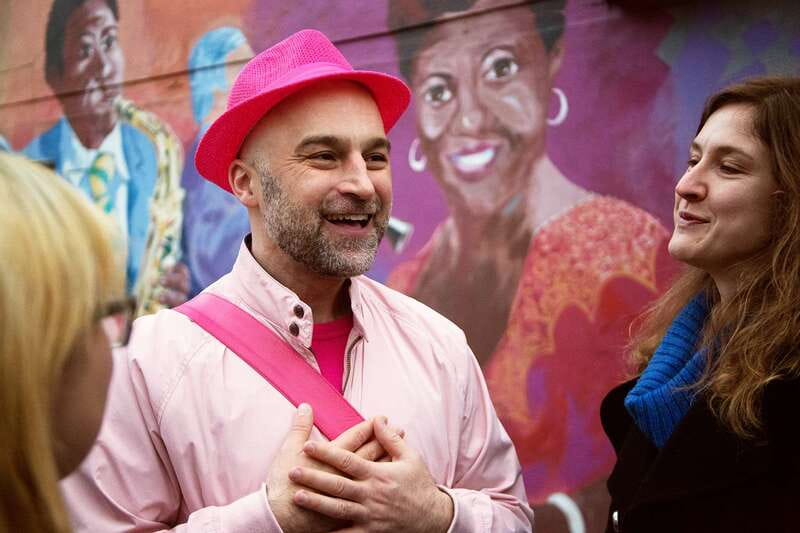
Reviewed · HISTORICAL TOURS
Vancouver: LGBTQ2+ History Tour in the West End
Vancouver’s LGBTQ2+ history is not confined to a museum. It sits along Burrard Street, in tree-lined West End blocks, at Nelson Park, and in the bars and restaurants of Davie Street Village. This two-hour walk with Glenn Tkach, a queer historian and professional storyteller, connects those places to the people who fought, organized, mourned, celebrated, and changed the city.
I like two things right away: the route gives you a clear sense of place, and Glenn brings the subject to life with stories about Imperial Court coronations, drag kings, gay ministers, the GRID crisis, and the earliest Pride parade. The main consideration is the subject matter. This is an adult-oriented history tour with references to illness, discrimination, violence, and other mature themes, so it is not a light sightseeing stroll.
Key points at a glance
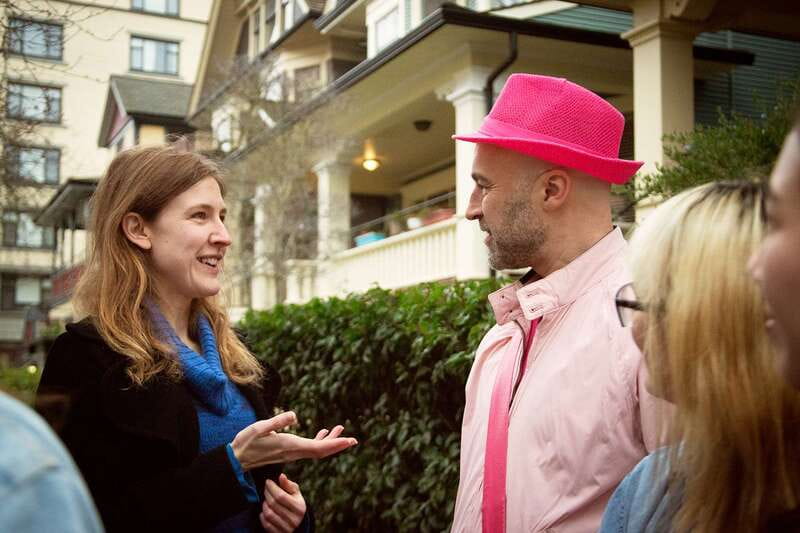
- Glenn Tkach leads the walk: You are guided by the tour’s creator, a local queer historian and professional storyteller.
- The route links Downtown to Davie Street: Start at 930 Burrard Street and finish in the heart of Vancouver’s Gay Village.
- Stories cover hard times and victories: Expect discussion of the GRID crisis, Patient Zero, bookstore bombings, and community activism.
- The route includes Nelson Park and Jim Deva Plaza: These stops add quiet reflection and a direct connection to local LGBTQ2+ memory.
- It costs $28 for two hours: That is a fair price for a focused history walk led by its creator, especially if you value interpretation over sightseeing alone.
- Dress for rain or shine: Comfortable shoes and weather-ready clothing matter more here than any special equipment.
Starting at Trees Organic Coffee Shop on Burrard Street
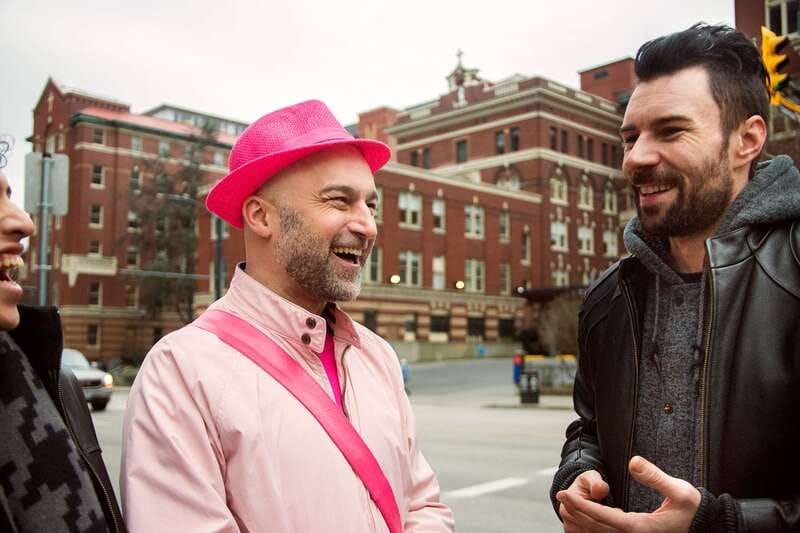
The tour begins outside Trees Organic Coffee Shop at 930 Burrard Street. This is a practical meeting point in central Vancouver, and starting downtown lets the story unfold as you walk toward the West End rather than dropping you into Davie Street with no context.
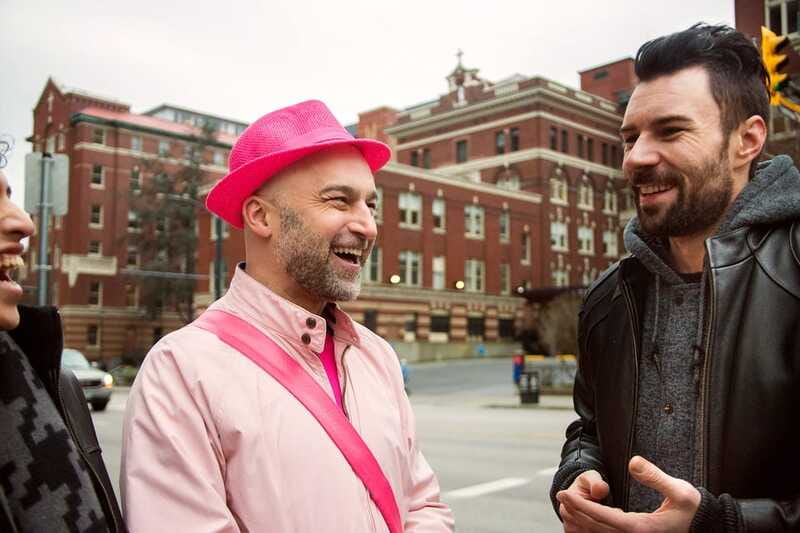
Glenn Tkach is easy to identify by his Man In Pink description. More important, he is not simply reading a standard script. He created the tour and brings his own focus as a queer historian and professional storyteller. That matters on a history walk, because the quality of the experience depends heavily on how well the guide connects names, places, and events.
You should arrive ready to walk for two hours. The tour is wheelchair accessible, but you will still want comfortable shoes. It operates rain or shine, so check the forecast and dress for the conditions. Vancouver rain can make even a short walk feel long if you arrive in thin shoes or without a waterproof layer.
More history tours in Vancouver:
- Gastown Historic Walking Food Tour
★ 5.0 · 1,863 reviews - The Really Gay History Tour in Vancouver, Canada
★ 5.0 · 357 reviews - Vancouver: Guided Food and City History Tour
★ 4.5 · 53 reviews
Walking from Downtown into the Davie Street Village
The first part of the route takes you from the center of Downtown Vancouver toward the West End and Davie Street Village. The change in setting helps you understand that the city’s LGBTQ2+ story is tied to ordinary streets, churches, parks, businesses, and public gathering places.
This is not a tour built around grand monuments. Much of the value comes from learning what happened in places that can look unremarkable at first glance. Glenn’s job is to help you see the meaning behind those locations and understand how a community made space for itself over time.
You will hear about the Imperial Court coronations, a colorful part of queer community culture, as well as drag kings at the Quadra. These stories broaden the usual picture of LGBTQ2+ history. The past was not only protest marches and political campaigns. It also included performance, chosen family, social events, fundraising, and public celebrations.
The walk also includes the story of gay ministers at the United Church. That subject adds another layer, showing how religious institutions and queer lives could meet in complicated ways. If you enjoy tours that deal with social change without reducing it to a simple victory story, this section should hold your attention.
Nelson Park and the stories behind public space
Nelson Park offers a pause from the city streets. The park is described as an urban oasis, but its value on this tour is not only visual. It gives Glenn room to tell stories in a quieter setting and gives you a chance to take in the route before moving farther into the West End.
A stop like this helps pace the walk. The tour does not rush from one fact to the next. One Canadian booking described Glenn’s pacing and structure as particular strengths, and that is useful to know if you worry that a two-hour history walk might feel like a lecture delivered while marching.
The park also fits the wider theme of the tour: community history is often found in shared public spaces. Parks, streets, plazas, churches, and neighborhood businesses can become important because people gather there, organize there, or remember events there.
The GRID crisis, Patient Zero, and difficult chapters
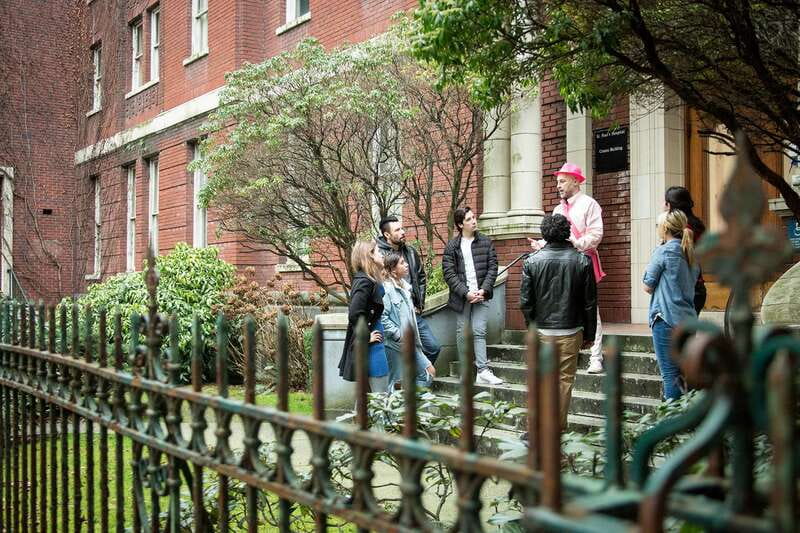
This tour does not soften the painful parts of LGBTQ2+ history. Glenn discusses the GRID crisis and Patient Zero, subjects connected to fear, stigma, illness, and the damage caused by misinformation. The material may be difficult, but leaving it out would give you a false picture of the community’s path through Vancouver’s recent past.
The discussion is balanced by stories of people who acted when silence was easier. You hear about the struggles and triumphs of people who had the courage to fight back. That balance is one of the tour’s strongest features. It avoids presenting history as a smooth march toward acceptance.
If you are sensitive to stories about disease, discrimination, or loss, keep that in mind before booking. The tour is recommended for ages 14 and up, though children aged 10 and older can attend if their parents are comfortable with mature subject matter. Children under 10 are not suitable for this experience.
Same city, a very different sort of afternoon:
- Vancouver Half-Day Whale Watching Adventure with Free Photos
★ 5.0 · 5,000 reviews - Big Bus Vancouver Hop-On Hop-Off Sightseeing Tour
★ 3.5 · 3,028 reviews - Victoria & Butchart Gardens Tour with Ferry from Vancouver
★ 4.5 · 2,703 reviews - Vancouver: Covered Whale Watching Adventure with Free Photos
★ 4.8 · 2,260 reviews
The earliest Pride parade and the fight for visibility
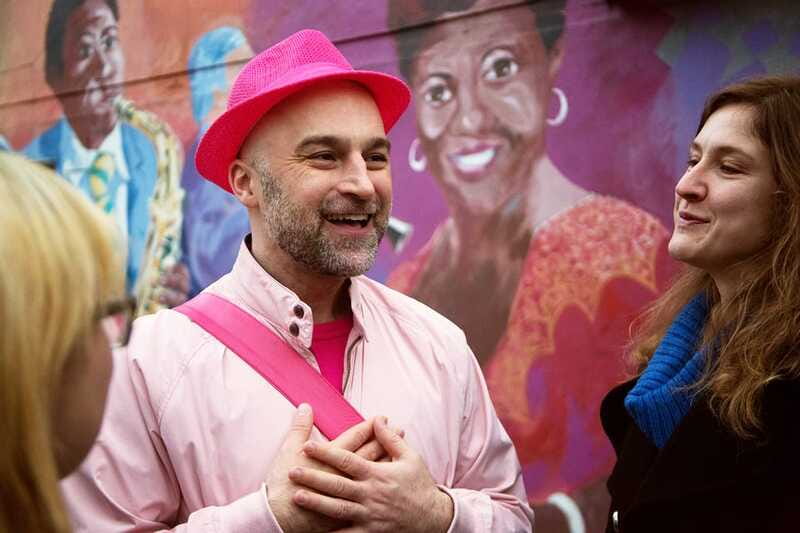
As the route continues through the tree-lined West End, the focus turns to the city’s earliest Pride parade. Pride can look like a large, established event today, but this story takes you back to a time when public visibility required real courage.
That context makes the present-day Davie Street Village more meaningful. You are not just walking through a neighborhood known for LGBTQ2+ nightlife. You are tracing how public celebration developed from organizing, risk, persistence, and the need to claim a place in the city.
I also like that the tour gives attention to people rather than treating Pride as an abstract institution. The supplied stories include a transgender campaigner who blew the whistle on Vancouver’s biggest crime. That detail points to the range of roles LGBTQ2+ people have played in the city, including advocacy and public accountability beyond the usual parade narrative.
Jim Deva Plaza and the memory of resistance
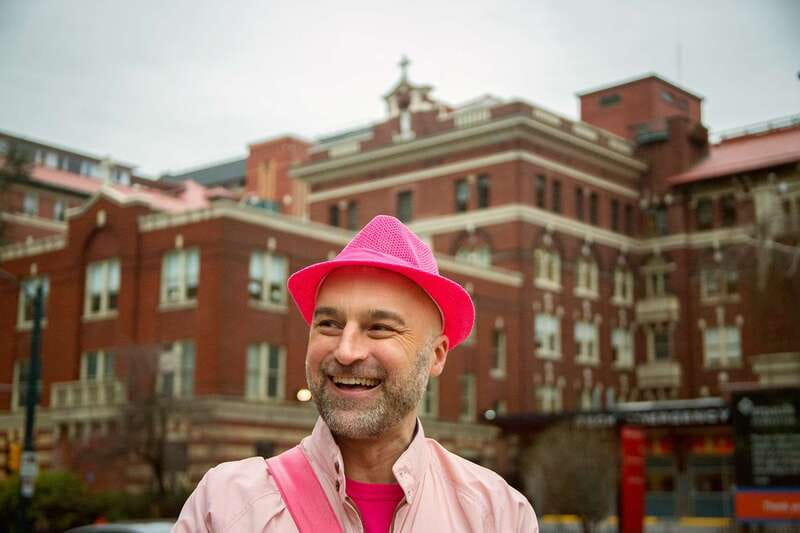
Jim Deva Plaza is another important point along the walk. The plaza is tied to the memory of Jim Deva, a prominent Vancouver LGBTQ2+ activist and bookseller, and the tour connects it with the story of bookstore bombings.
That combination makes the stop especially powerful. A bookstore can represent ideas, community, education, and visibility. Attacks on such a place are not just property crimes in this context. They are attacks on the ability of people to find information, meet one another, and see their lives reflected in print.
The tour’s treatment of the bookstore bombings also shows why local history deserves more than a quick plaque or date. Glenn can connect the event to the broader pressures faced by the community and to the people who refused to disappear. Expect this section to be serious rather than entertaining in the usual sightseeing sense.
Davie Street Village as the tour’s final scene
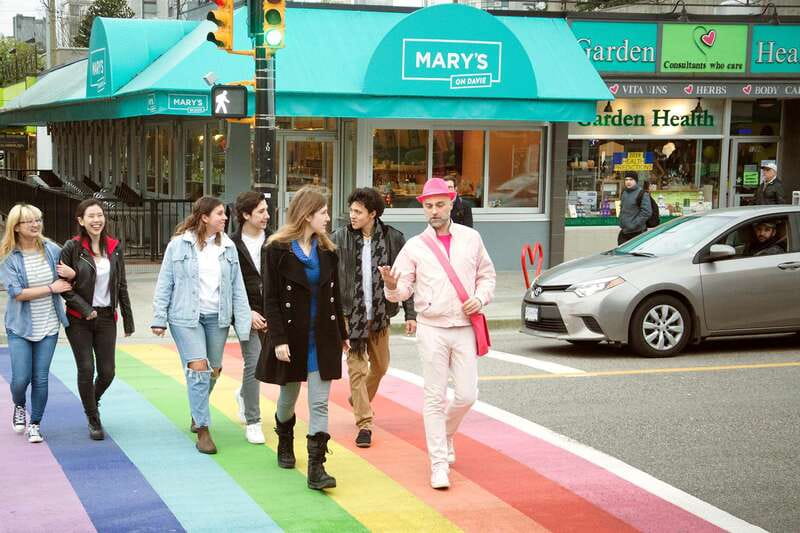
The walk finishes in the middle of Davie Street Village. That is a smart ending because the neighborhood gives you a living setting for everything you have just heard.
You can continue the afternoon or evening with a drink or meal at one of the area’s bars and restaurants. Food and drinks are not included, but that is easy to handle after the tour, and finishing here lets you reflect while the setting is still fresh.
The final stop also makes the tour useful as an introduction to Vancouver. If you are new to the city, you get both historical context and a neighborhood to explore afterward. If you already know Davie Street, the tour may change the way you read its public spaces and community symbols.
Do not expect a long list of restaurant recommendations or a nightlife crawl. This is a history walk that ends in the village, not a bar tour. The neighborhood is your option after the guided portion.
Why the guide makes a difference
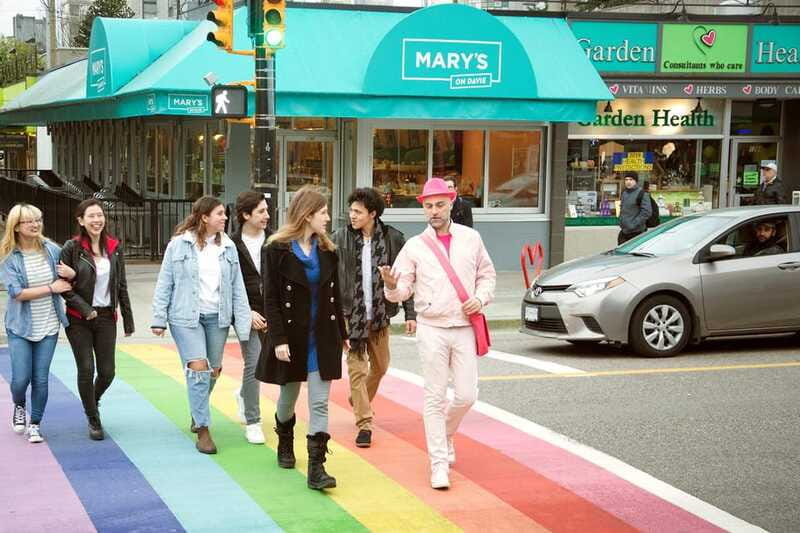
Glenn Tkach is the tour’s creator, and that is one of the clearest reasons to book it. The route and stories have been shaped by someone who has made Vancouver’s LGBTQ2+ past his subject, rather than by a general city guide adding a short LGBTQ2+ chapter to a larger tour.
His style appears to be a major part of the experience. Direct feedback describes him as a riveting storyteller and praises the way he mixes humor with serious material. Another person who had lived in Vancouver’s LGBTQ2+ community since the mid-1980s found the tour personal, insightful, uplifting, emotional, and inspiring.
That range is worth noting. The walk is designed to welcome people who are new to the subject, but it can also work for people who have lived through part of the history themselves. You should not assume that familiarity with Davie Street or Vancouver’s queer community means you have heard all the stories.
The guide speaks English, and the tour is built around live storytelling rather than audio commentary. If you want a quiet, self-paced visit, this may not be your best choice. If you like asking questions and following a guide’s interpretation from one location to the next, the format should suit you well.
Is $28 a fair price for two hours?
At $28 per person, the tour sits in the affordable range for a two-hour guided walk in a major Canadian city. You are paying for a focused subject, a live guide, and a route created around local stories rather than a broad overview of Vancouver.
The value is strongest if you would otherwise walk through the West End without knowing what happened there. A self-guided stroll costs less, of course, but you would need to research the people, events, and locations yourself. You would also miss Glenn’s pacing, humor, and links between separate chapters of the community’s past.
The price is less compelling if you want a general sightseeing tour with major landmarks, panoramic views, or included refreshments. Those are not the point here. This experience earns its fee through interpretation and local context.
Booking is fairly flexible. You can reserve now and pay later, and cancellation is available up to 24 hours before the tour for a full refund. Starting times vary, so check availability for your date.
Who should book this West End history walk?
I would recommend the tour to anyone interested in Vancouver’s social history, LGBTQ2+ culture, community activism, or public memory. It is also a good choice if you want to support a local guide who has built a tour around a subject often treated as a side note.
It suits solo visitors, couples, friends, and locals who want to learn more about the city they already know. The route may be especially useful early in your stay because it ends in Davie Street Village, where you can continue exploring on your own.
Families should make a clear decision based on the age guidance. Children under 10 cannot attend. Older children may join, but the tour includes mature themes, including the GRID crisis, Patient Zero, violence, and discrimination.
The main physical requirement is a two-hour walk through city streets and public spaces. The tour is wheelchair accessible, but the supplied information does not describe the exact surface conditions or restroom arrangements, so anyone with specific mobility needs should confirm those details before booking.
Should you book the LGBTQ2+ History Tour?
Book it if you want people-centered history, thoughtful storytelling, and a closer look at how Vancouver’s LGBTQ2+ community fought for visibility and safety. Glenn Tkach’s role as guide and creator gives the experience a clear sense of purpose, while the route links Downtown, Nelson Park, Jim Deva Plaza, and Davie Street Village.
Skip it if you are looking for a general Vancouver highlights tour, a nightlife outing, or a short walk with no difficult subject matter. For everyone else, $28 is a sensible price for two hours of local history, especially when you finish within easy reach of Davie Street’s bars and restaurants.
FAQ
Where does the Vancouver LGBTQ2+ History Tour begin?
The tour begins outside Trees Organic Coffee Shop at 930 Burrard Street in Vancouver.
Where does the tour finish?
It finishes in Davie Street Village, in the heart of Vancouver’s LGBTQ2+ neighborhood.
How long does the tour last?
The walking tour lasts two hours.
Who guides the tour?
Glenn Tkach leads the tour. He is a queer historian, professional storyteller, and the creator of the experience.
What language is the tour in?
The live guided tour is conducted in English.
How much does the tour cost?
The listed price is $28 per person.
Is the tour wheelchair accessible?
Yes, the activity is described as wheelchair accessible.
What should I bring?
Bring comfortable shoes and clothing suited to the weather. Tours operate rain or shine.
Can children join the tour?
Children under 10 cannot attend. The recommended age is 14 and up, though children aged 10 or older may attend if their parents are comfortable with mature subject matter.
Are food and drinks included?
No. Food and drinks are not included, but the tour ends in Davie Street Village, where you can find bars and restaurants for a post-tour drink or meal.
Recently reviewed around Vancouver
- Vancouver: Morning Kayak & Seal Cruise★ 4.9 · 6 reviews
- West Coast Party Crawl – Route B★ 4.4 · 13 reviews
- Vancouver: Zodiac Whale Watching Tour from Granville Island★ 4.6 · 6 reviews
- West Coast Party Crawl – Route A★ 4.5 · 9 reviews
- Vancouver: Self-Guided Smartphone Walking Tour of Gastown★ 4.0 · 15 reviews
- Vancouver Waterfront Guided Bike/E-Bike Tour★ 5.0 · 3 reviews
- Vancouver: Waterfront Sightseeing Tour – City and Waterfall★ 4.9 · 8 reviews
- Vancouver UNESCO Biosphere Reserve Wildlife Scenic Boat Tour★ 5.0 · 5 reviews
Historical Tours, compared.

The Really Gay History Tour in Vancouver, Canada
Read our review →
Vancouver Holiday History and Hot Chocolate Tour
Read our review →Browse the lists this tour appears in