
Reviewed · WALKING TOURS
Ancient Trees of Vancouver Walking Tour
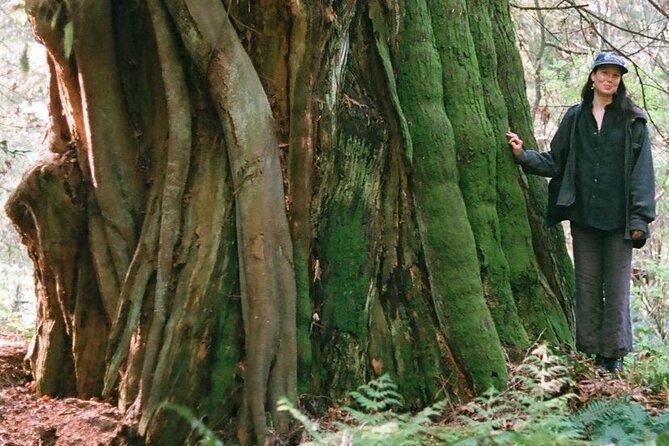
Stanley Park’s ancient trees are the real surprise here. Just minutes from downtown Vancouver, you can walk among western red cedars said to be up to 1,000 years old, towering Douglas firs, and one of Canada’s largest known maple trees. Colin Spratt brings old maps, postcards, and photographs that help connect the forest to Vancouver’s past.
I like the small group of no more than 10 and the easy-to-follow mix of tree science, local history, and Indigenous knowledge. I also like that this is not a generic park stroll. Colin’s work with the BC Big Tree Committee gives the walk a clear focus, and his enthusiasm helps you notice details you would likely miss alone.
The main consideration is time. Three hours is a serious portion of your day, and the tour is about learning as much as walking. If you want a quick photo stop or a brisk overview of Stanley Park, this may feel too long. If you enjoy forests, old stories, and careful observation, the pace should suit you well.
Key points to know before you go
- Ancient trees in the city: See old-growth remnants in Stanley Park, including massive western red cedars and Douglas firs.
- Colin Spratt leads the walk: He is a big-tree seeker and member of the BC Big Tree Committee.
- A maximum of 10 people: The small group makes it easier to hear, ask questions, and pause at important trees.
- History comes with the forest: Old maps, 120-year-old postcards, and photographs add context to the walk.
- Morning and afternoon departures: You can fit the experience around other Vancouver plans.
- Three hours on park trails: The tour begins and ends at Ferguson Point, with no pickup or drop-off service.
Why Stanley Park’s old trees are worth three hours
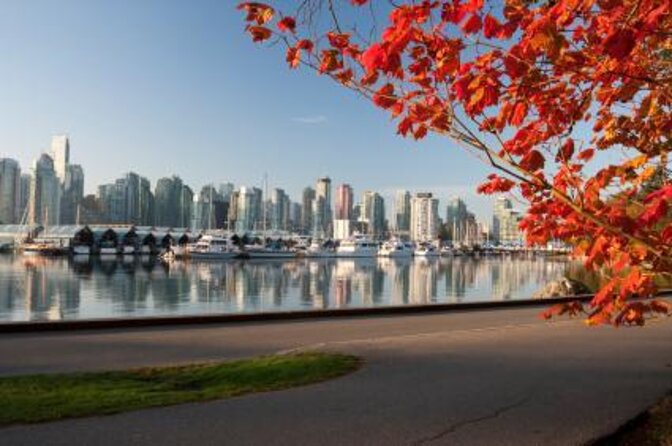
Many people come to Stanley Park for the seawall, views, gardens, and easy access from downtown. Those are good reasons to visit, but the forest interior offers a different experience. The Ancient Trees of Vancouver walk shifts your attention from the park as a city attraction to the park as a living forest.
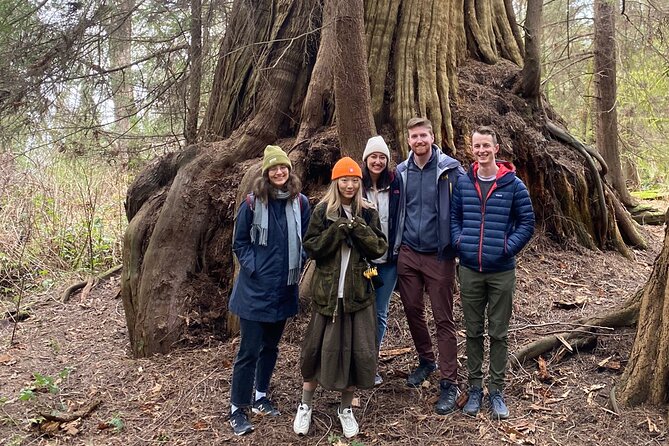
The key point is age. Some of the cedars and Douglas firs you see are described as several centuries old, with examples reaching roughly 600, 800, or even 1,000 years. One of the tour’s most striking subjects is a giant western red cedar often called the grandfather tree. You may also see the largest known maple tree in Canada, along with huge stumps and trees that show how several generations can grow together.
I like this approach because it makes Stanley Park feel less like a patch of greenery beside Vancouver and more like a place with its own long life. The city around it is modern. The trees began growing long before Vancouver existed as an urban center.
The tour also explains why old-growth forests matter. Ancient trees are not simply large versions of younger trees. Their hollow trunks, decaying limbs, fallen logs, and broad crowns create shelter and food for other life. A dead tree can continue to serve the forest for decades, supporting new growth as it breaks down.
More walking tours in Vancouver:
- Gastown Historic Walking Food Tour
★ 5.0 · 1,863 reviews - Vancouver Lost Souls of Gastown Walking Tour
★ 5.0 · 1,273 reviews - A Wok Around Chinatown: Culinary and Cultural Walking Tour Led by a Chef
★ 5.0 · 610 reviews
Starting at Ferguson Point
The walk begins at Ferguson Point, at 7501 Stanley Park Drive, and returns to the same meeting point. You arrange your own way there and back, since pickup and drop-off are not included.
Starting and finishing in one place is useful if you are building a day around Stanley Park. You do not need to track down a different ending point or leave the park from another neighborhood. Morning and afternoon options also make it easier to pair the tour with another activity.
The precise route through the forest is not laid out stop by stop in the available information, so you should think of this as a guided park walk rather than a fixed sightseeing circuit. The point is not to cover every corner of Stanley Park. It is to reach selected old trees and understand what makes them special.
Expect a walk on park trails over about three hours. Most people can participate, and service animals are allowed. Still, it is sensible to dress for an outdoor walk and plan for changing conditions, since the experience takes place on forest paths rather than indoors.
Meeting the giant western red cedars
Western red cedar is central to this experience. The older trees can look almost unreal in scale, with wide trunks, weathered bark, and crowns that suggest their age. Colin explains how to read these trees rather than simply photographing them.
One detail that adds real depth is the way some ancient cedars become hollow. A hollow trunk may look damaged or finished, but the tree can remain alive and useful. Large hollows can also provide shelter for wildlife, including bears according to the explanations shared on the walk.
The tour also covers the cedar’s importance to Coast Salish peoples. Cedar was used for canoes, longhouses, clothing, rope, and other everyday needs. Its bark and wood were not just convenient materials. The tree supported daily life and carried cultural meaning as a tree of life.
That part of the tour matters because it prevents the walk from treating the forest as an untouched museum piece. The area has been home to Coast Salish peoples for thousands of years, long before Stanley Park became an urban park. You get a better sense of the relationship between people and trees, rather than hearing only a list of species and measurements.
The walk may also point out the crown shapes of very old cedars. Their upper branches can form intricate candelabra-like patterns. These shapes are not a decoration added by age. They are clues to the tree’s long growth and survival.
Towering Douglas firs and the forest’s age
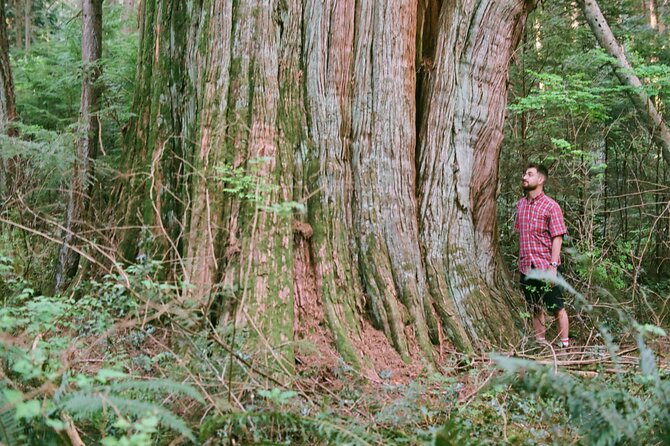
The Douglas firs provide a different kind of spectacle. They are known for height, and the tour includes examples described as roughly 600 to 800 years old. Looking up at a tree this tall can be awkward in the best way. You may need to step back to take in the trunk and crown at once.
Colin also explains how tree ages are estimated and how trees function within the larger forest system. That gives the walk a scientific backbone without turning it into a classroom lecture. The subject stays connected to what you can see: bark, branches, fallen wood, seedlings, and the layered structure of the forest.
A particularly useful lesson concerns nurse logs. When an old tree falls, it does not simply disappear from the forest. Its trunk can hold moisture, gather soil, and support new plants. Several generations may appear to live on top of one another, with new trees growing from the remains of older ones.
This is one reason I would not judge the tour only by the number of famous trees you see. The value is also in learning how to interpret the forest. Afterward, a fallen trunk may look less like debris and more like part of the next stage of growth.
The tour also addresses the fragile side of old trees. Ancient forests face threats, and a tree that took hundreds of years to mature cannot be replaced quickly. That conservation message is present without turning the outing into a political speech. You come away with a clearer sense of both resilience and loss.
Same city, a very different sort of afternoon:
- Vancouver Half-Day Whale Watching Adventure with Free Photos
★ 5.0 · 5,000 reviews - Big Bus Vancouver Hop-On Hop-Off Sightseeing Tour
★ 3.5 · 3,028 reviews - Victoria & Butchart Gardens Tour with Ferry from Vancouver
★ 4.5 · 2,703 reviews - Vancouver: Covered Whale Watching Adventure with Free Photos
★ 4.8 · 2,260 reviews
Old maps, postcards, and photographs
The visual material is a smart part of the experience. Colin uses old maps, photographs, and postcards from roughly 120 years ago to show how Stanley Park and Vancouver have changed.
This helps anchor the stories. Instead of hearing that the park has a complicated past and trying to picture it, you can compare earlier views with the present forest. The materials also add texture to the discussion of logging, city growth, conservation, and the creation of Stanley Park.
I especially like this feature for people who enjoy local history but do not want a formal museum visit. The objects are used on the trail, in the place they help explain. A photograph or map can make a tree, path, or section of the park easier to understand.
The historical material also gives the tour a wider frame. You learn about the park, Vancouver, and the people who lived here before the city took shape. The forest is not treated as separate from human affairs. It has been shaped by use, protection, damage, and changing ideas about what a city park should be.
Colin Spratt’s guiding style
The guide is Colin Spratt, described as a well-known big-tree seeker and BC Big Tree Committee member. That background matters because the tour depends on more than general nature knowledge. Colin has a particular eye for large and old trees, and the walk centers on that specialist interest.
His style combines facts with stories, personal observations, local legends, and a fair amount of humor. He also has a reputation for patience, which is useful on a small walking tour where questions can easily become part of the experience.
Families may find the format especially appealing. Children have room to ask questions, and the subject is concrete: enormous trunks, hollow trees, canoe building, antler tests before carving, fire resistance, rot resistance, and seedlings growing from old wood. Those are easier ideas for a child to grasp than a general lecture about conservation.
The small group size is another advantage. With no more than 10 participants, you should have a better chance of hearing the explanations and getting a closer look at the photographs and maps. It also reduces the awkwardness of stopping in a narrow forest area with a large crowd.
At the same time, the guide’s enthusiasm means the tour is not a silent nature walk. You will spend time listening. That is a benefit if you want interpretation, but it may not suit someone who prefers to explore alone or spend three hours in quiet.
What the three-hour format means
Three hours gives Colin enough time to connect several subjects that usually get separated. You can look at a cedar, hear about its ecology, discuss its use by Coast Salish peoples, compare an old photograph, and then consider its conservation challenges.
That makes the tour feel more substantial than a quick stop at one giant tree. You are not simply told an age and sent on your way. The walk builds a broader picture of how trees grow, die, shelter life, serve people, and shape the identity of a place.
The trade-off is that you should not schedule this as a hurried add-on between tightly timed attractions. The experience is approximately three hours, and the forest walk works best when you allow yourself to pause. Morning and afternoon departures provide flexibility, but the total time remains significant.
The trails are described as easy in several accounts, and most people can participate. Even so, the tour is still outdoors and requires walking for much of the session. Anyone with a mobility concern should consider the three-hour trail format carefully, since detailed accessibility information is not provided.
Is $56.33 a fair price?
At $56.33 per person, this is not the cheapest way to see Stanley Park. You can enter the park without paying an admission ticket, walk some trails on your own, and find the seawall without a guide.
The price makes more sense if you value interpretation. You are paying for three hours with a specialist, a limited group, selected tree locations, historical visual material, and explanations you would be unlikely to assemble on your own. The big-tree focus also gives the visit a purpose beyond simply wandering.
I would call it good value for people who care about forests, conservation, local culture, or the details behind a place. It is less compelling if your main goal is a quick introduction to Stanley Park or a low-cost walk.
The tour’s strong reception and five-star rating fit the experience’s narrow focus, but you should still match your expectations to the product. This is a focused educational walk, not a general Vancouver sightseeing tour. You will not receive transportation, a meal, or a broad city overview.
Who should book this walk?
I would choose this tour if you enjoy trees, photography, ecology, conservation, or local history. It also works well for couples, solo visitors, friends, and families with children who are willing to walk and listen.
It is a particularly good choice if you have already seen Vancouver’s main downtown sights and want something more rooted in place. Stanley Park is familiar to many visitors, but this experience takes you away from the usual checklist and into the forest’s older story.
Families with children around school age may get a lot from the tour because the examples are visual and memorable. A 1,000-year-old cedar, a hollow trunk, and a nurse log are easier to remember than a string of dates.
I would skip it if you want a fast, self-guided outing, dislike guided commentary, or have no interest in trees. The subject is not a small part of the walk. It is the whole point.
Should you book the Ancient Trees of Vancouver tour?
Book it if you want to see Stanley Park through the eyes of someone who has spent years studying its largest and oldest trees. Colin Spratt’s mix of forest science, Coast Salish context, Vancouver history, old images, and conservation gives the walk more substance than a simple nature stroll.
The best reason to go is not one particular tree. It is the change in attention. You begin by looking for something big. You finish noticing hollows, dead wood, new seedlings, crown shapes, and the way an entire forest depends on trees at every stage of life.
For a focused three-hour experience at $56.33, I think it is a strong choice for nature-minded visitors and families. Just leave enough time in your schedule, meet at Ferguson Point, and expect an outdoor lesson rather than a quick photo stop.
FAQ
Where does the Ancient Trees of Vancouver tour begin?
The tour begins at Ferguson Point, 7501 Stanley Park Drive, Vancouver, British Columbia V6G 3E2.
Where does the tour end?
The activity ends back at the Ferguson Point meeting point.
How long does the tour last?
The walk lasts approximately three hours.
How much does the tour cost?
The listed price is $56.33 per person.
How many people can join the tour?
The maximum group size is 10 participants.
Is the tour offered in English?
Yes. The tour is offered in English.
Are morning and afternoon tours available?
Yes. Morning and afternoon tour times are offered.
What is included?
The tour includes a walking experience among ancient western red cedars and Douglas firs, an expert guide, and old maps, 120-year-old postcards, and photographs used to explain the forest and its past.
Is transportation included?
No. Pickup and drop-off at the meeting point are not included.
Can I cancel the tour for a refund?
You can cancel at least 24 hours before the local start time for a full refund. Cancellations or changes made less than 24 hours before the start time are not accepted for a refund.
Recently reviewed around Vancouver
- West Coast Party Crawl – Route B★ 4.4 · 13 reviews
- Vancouver: Morning Kayak & Seal Cruise★ 4.9 · 6 reviews
- Vancouver: Zodiac Whale Watching Tour from Granville Island★ 4.6 · 6 reviews
- West Coast Party Crawl – Route A★ 4.5 · 9 reviews
- Vancouver: Self-Guided Smartphone Walking Tour of Gastown★ 4.0 · 15 reviews
- Vancouver Waterfront Guided Bike/E-Bike Tour★ 5.0 · 3 reviews
- Vancouver: Waterfront Sightseeing Tour – City and Waterfall★ 4.9 · 8 reviews
- Vancouver UNESCO Biosphere Reserve Wildlife Scenic Boat Tour★ 5.0 · 5 reviews
Walking Tours, compared.

A Wok Around Chinatown: Culinary and Cultural Walking Tour Led by a Chef
Read our review →
The Forbidden Downtown and Gastown Walking Tour
Read our review →
Gratuity-Based Vancouver City Highlights 3 Hour Walking Tour
Read our review →
Experience Gastown Vancouver’s Elite Walking Food Tour
Read our review →
Browse the lists this tour appears in