
Reviewed · STANLEY PARK TOURS
Vancouver: The Dark Secrets of Stanley Park Tour
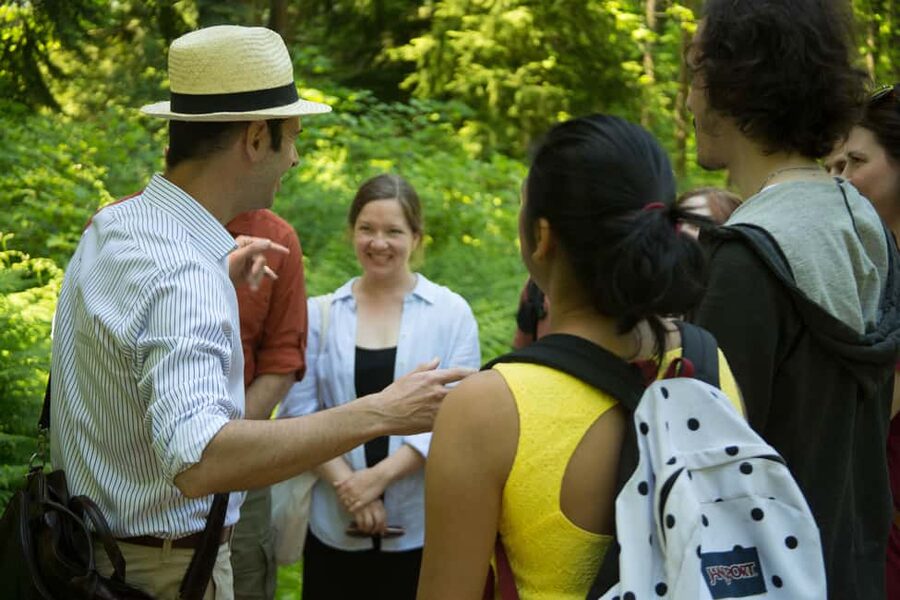
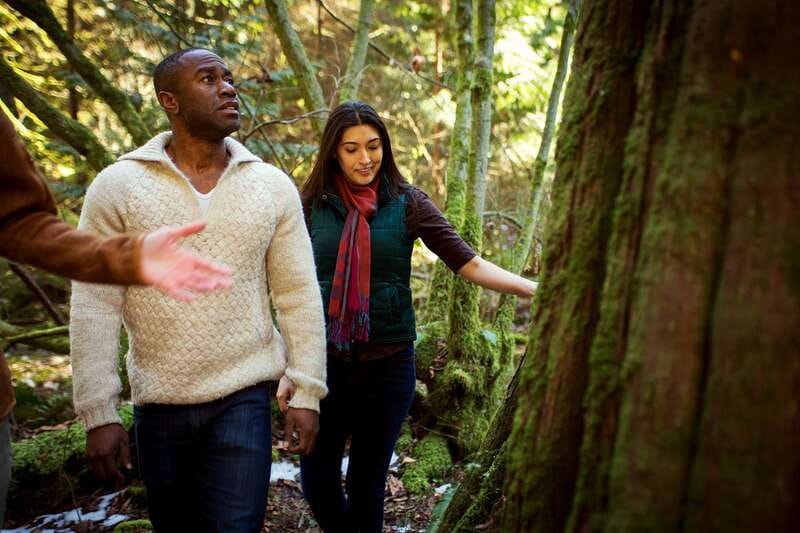
Stanley Park’s famous trees hide a past that is far darker and more complicated than its postcard image suggests. This two-hour walking tour follows forest paths, former Coast Salish village sites, Deadman’s Island, old cemeteries, crime scenes, and views of downtown Vancouver.
I like the way the tour connects Indigenous history with the park’s natural setting, rather than treating the forest as untouched wilderness. I also like the mix of serious history, local legend, true crime, totem poles, and big city views. Guides including Cole, Ashlyn, and Glenn have earned especially warm praise for clear, engaging storytelling.
The main drawback is that this is not a gentle sightseeing stroll for everyone. You need comfortable shoes, some tolerance for adult subject matter, and the ability to walk forest trails. Children under 10 and wheelchair users should choose another way to see Stanley Park.
Key points to know before you book
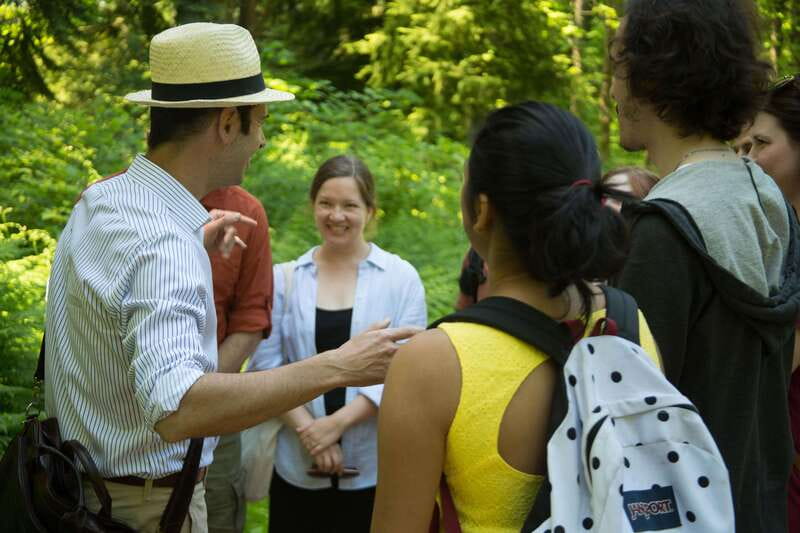
- Former Coast Salish village sites: Learn how Indigenous communities lived in the park for millennia before facing forced eviction and government pressure.
- Deadman’s Island: Hear the Squamish legend of an ancient war and learn how the island served as a pest house during 19th-century smallpox outbreaks.
- Off-the-beaten-path walking: The route uses forested trails that many people miss while visiting the seawall and totem poles.
- A darker side of Stanley Park: Secret cemeteries, ghost stumps, crime scenes, and true crime stories give the tour its unusual edge.
- Two hours for $28: The price is reasonable if you want context and storytelling, not simply a walk past famous sights.
- Adult-oriented content: The recommended age is 14+, though children 10 and older may attend if their parents are comfortable with mature themes.
Stanley Park beyond the postcard
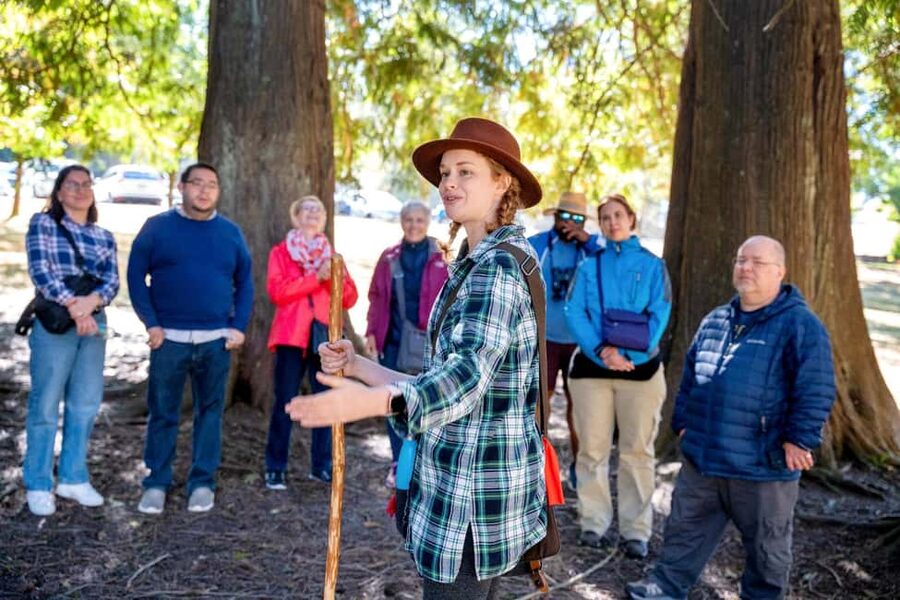
Most first visits to Stanley Park follow the seawall. You see water, mountains, cyclists, cruise ships, and the celebrated totem poles. It is an easy way to appreciate the park, but it can leave you with the impression that this has always been a stretch of untouched forest.
This tour challenges that simple story from the start. Your guide presents Stanley Park as a place shaped by Indigenous life, colonial policy, illness, conflict, migration, work, crime, and public memory. I like that approach because the trees are still beautiful, but you see them with more context.
You meet at the whale sculpture outside the Vancouver Aquarium at 845 Avison Way. That location is useful if you are already visiting the aquarium or staying near the park’s main attractions. From there, the route moves into the forest, where the tone changes quickly from familiar sightseeing to local history.
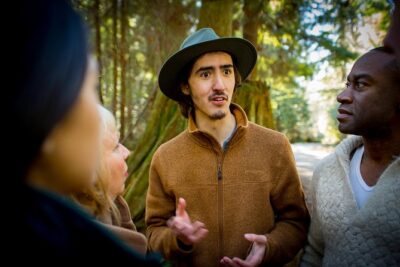
The experience is led in English by a professional storyteller and Stanley Park specialist. Names attached to recent tours include Cole, Ashlyn, and Glenn, and the strongest praise focuses on guides who make the stories easy to follow and hold your attention over the full walk.
More Stanley Park tours:
- Vancouver City Sightseeing Tour: Granville Island & Stanley Park
★ 4.5 · 1,782 reviews - Vancouver Tour: Stanley Park, Granville Island & Capilano Bridge
★ 4.5 · 1,778 reviews - The Stanley Park Bicycle Tour by Cycle City Tours
★ 5.0 · 785 reviews
Forest trails and the people who lived here
One of the strongest parts of the tour is its treatment of the Coast Salish communities who lived on this land for millennia. The forest is not presented as an empty space waiting to become a city park. Instead, you learn to look for traces of former villages that are easy to miss today.
The tour also explains the forced evictions and the long struggle of Indigenous residents facing continued government pressure. That subject gives the walk moral weight. You are not just hearing a tidy story about Vancouver’s past. You are being asked to consider who was allowed to remain in Stanley Park and who was pushed out.
This part may be especially valuable if you have already seen the park but know little about its Indigenous history. Even people born and raised in Vancouver can find that the tour fills major gaps in their understanding. The stories help turn ordinary-looking stretches of forest into places with human meaning.
You should come prepared for difficult material. The discussion of displacement and the treatment of Indigenous people is not a brief historical footnote. It is one of the central subjects of the walk, and that is a strength for anyone seeking a more honest account of the park.
Deadman’s Island and the park’s uneasy legends
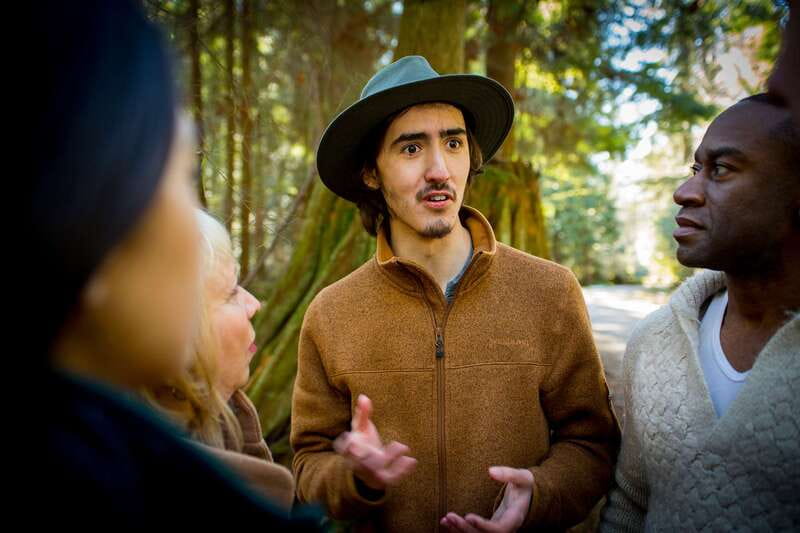
Deadman’s Island adds another layer to the tour. Here, the guide combines a Squamish legend about an ancient war with the island’s later use as a pest house during smallpox outbreaks in the 1800s.
That combination captures the tour’s overall style. You hear a traditional story, then move into documented public-health history and the fear surrounding disease. The subject is unsettling, but it gives you a better sense of how people once understood danger in and around Vancouver.
A stop like this works best when you listen closely rather than expect a major monument or museum display. The interest comes from the story attached to the place. You may be looking at a quiet patch of trees or shoreline while hearing about conflict, illness, and death.
The tour’s true crime material follows naturally from this darker tone. You hear famous local crime stories and visit places connected with shocking incidents. The exact impact will depend on your taste. If you enjoy local mysteries and serious historical storytelling, these sections add variety. If you prefer a purely scenic park walk, they may feel heavy.
Cemeteries, ghost stumps, and stories hiding in plain sight
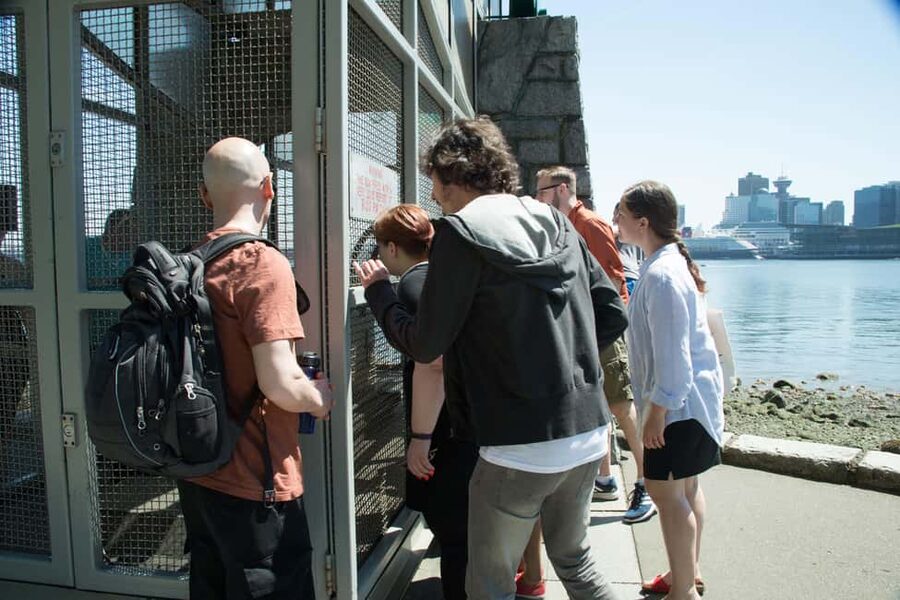
The mention of secret cemeteries is not just a spooky hook. These sites show how much of Stanley Park’s past has been covered, forgotten, or absorbed into the modern park. The tour encourages you to notice small signs of earlier use instead of looking only for grand monuments.
Ghost stumps are another example. The name suggests folklore, but the larger point is how the forest preserves clues to past logging and land use. You get a sense that the park has not always looked as it does now. Trees, stumps, trails, and clearings can all carry part of the story.
This is where comfortable footwear matters. The walk includes wild, forested trails rather than only smooth paved paths. The supplied information does not give a precise distance or trail condition for every section, so expect ordinary outdoor walking rather than a fully accessible urban route.
Wear weather-appropriate clothes and bring water. Sunscreen and drinks are also advised. Vancouver weather can change, and a shaded forest trail can still become damp, warm, or slippery depending on the day. Pets are not allowed.
Same city, a very different sort of afternoon:
- Vancouver Half-Day Whale Watching Adventure with Free Photos
★ 5.0 · 5,000 reviews - Big Bus Vancouver Hop-On Hop-Off Sightseeing Tour
★ 3.5 · 3,028 reviews - Victoria & Butchart Gardens Tour with Ferry from Vancouver
★ 4.5 · 2,703 reviews - Vancouver: Covered Whale Watching Adventure with Free Photos
★ 4.8 · 2,260 reviews
Totem poles and the better-known Stanley Park
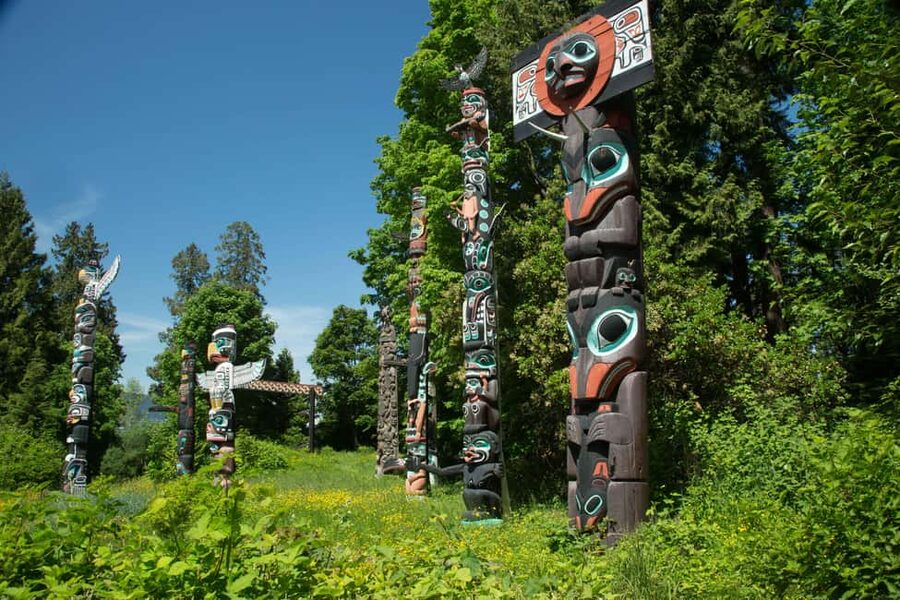
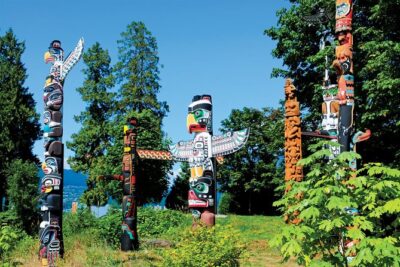
The tour does not ignore Stanley Park’s most famous sights. You visit the world-famous totem poles, a useful contrast to the less familiar village sites, cemeteries, and forest paths.
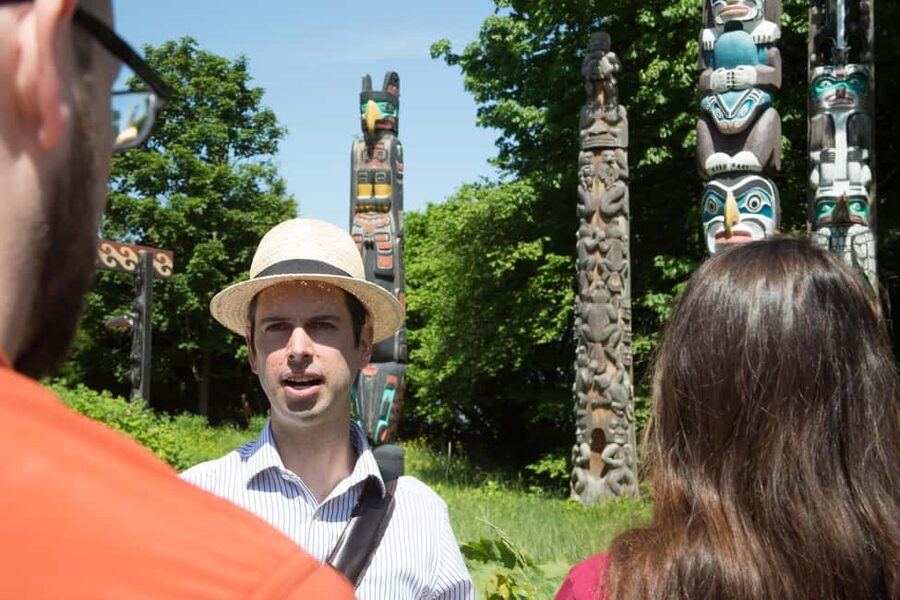
The poles are often treated as a quick photo stop. With a guide, you get a chance to place them within the broader story of Indigenous cultures and the way those cultures are presented to the public. The experience does not promise a specialist art lecture, so you should book it for the wider history rather than detailed carving analysis.
This stop also helps you connect the park’s well-known image with the harder questions raised earlier. Stanley Park can be both a beautiful public space and a place marked by displacement. The tour does not ask you to choose one view over the other.
That balance is one reason the route works well for repeat visitors. If you have already photographed the totem poles and walked part of the seawall, the forest stops and historical explanations give the park a different shape.
The seawall, skyline, and Lions Gate Bridge
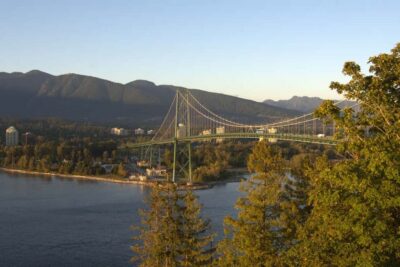
At points along the walk, you reach the seawall and scenic viewpoints. From there, you can look toward downtown Vancouver and the Lions Gate Bridge. These views provide welcome breathing room after the more difficult stories.
I like the contrast. You might spend several minutes hearing about evictions, disease, or crime, then find yourself looking across the water at one of Vancouver’s most recognizable views. The city seems polished and modern from a distance, yet the tour has shown you the complicated past beneath that image.
The route ends back at the Vancouver Aquarium, so you do not need to arrange a second meeting point or find your way across the park after dark stories and forest paths. The two-hour duration also fits neatly before or after other plans, though you should avoid booking it too tightly against an attraction with a fixed entry time.
Is $28 a fair price?
At $28 per person, this tour offers good value if you want interpretation rather than independent wandering. You can walk through Stanley Park for free, of course, but a self-guided visit will not easily reveal former village sites, the history of forced evictions, Deadman’s Island’s pest-house story, secret cemeteries, or the local crime connections.
The value rests heavily on the guide. A strong storyteller can make an ordinary trail feel significant and keep the material clear over two hours. Recent guides have included Cole, Ashlyn, and Glenn, and the praise attached to those tours centers on preparation, friendliness, and the ability to make the history interesting.
The tour is also a good deal for people who think they already know Stanley Park. One Canadian participant who grew up in Vancouver expected to learn little but came away surprised by how much was new. That is a useful sign for repeat visitors, though no tour can guarantee that every subject will be new to you.
The price is less compelling if you only want photographs, a relaxed nature walk, or a short introduction to the totem poles. In that case, walking the seawall independently may suit you better. Book this tour when the stories are the main attraction.
Who should take this Stanley Park walk?
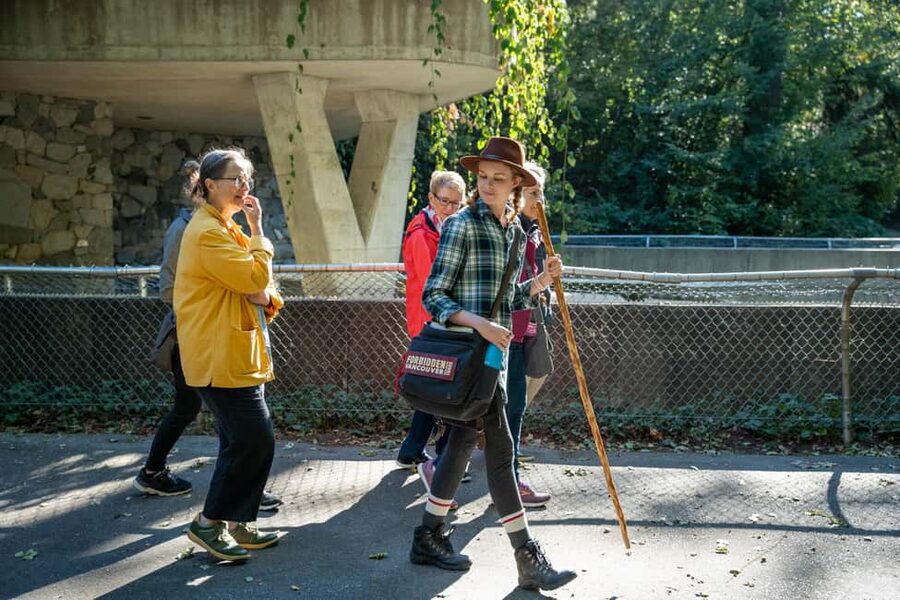
I would recommend it most strongly to adults and older teenagers interested in local history, Indigenous history, urban legends, true crime, and the less polished side of major tourist sights.
It suits you if you enjoy walking while listening, rather than stopping at a museum display or reading long panels. The guide does the connecting work, showing how separate subjects fit together: Coast Salish villages, government policy, public fear during disease outbreaks, forgotten burial places, crime, and modern park scenery.
It also suits repeat visitors. If you have already seen the aquarium, totem poles, and seawall, this route adds places and stories that are not obvious on a standard visit.
Parents should use their judgment. The recommended age is 14+, while children aged 10 and older may attend if their parents are comfortable with adult themes. The material includes crime, death, displacement, and disease, so it is not designed as a light family outing.
The tour is not suitable for children under 10 or wheelchair users. Since the route uses forest trails, anyone with limited mobility should consider the accessibility limitation carefully before booking.
Practical advice for a better walk
Meet at the whale sculpture outside the Vancouver Aquarium, not inside the aquarium. Arrive ready to begin walking, with comfortable shoes and water already with you.
Bring sunscreen and clothing suited to the weather. Cash is listed among the suggested items, though no specific purchase during the tour is described. It is also sensible to keep your schedule flexible, since the activity lasts two hours and combines forest paths with outdoor viewpoints.
The tour is offered in English with a live guide. If you need another language, this experience is unlikely to fit your needs because only English is specified.
You can cancel up to 24 hours ahead for a full refund, and you can reserve now while paying later. Those terms are useful if Vancouver is one stop on a longer trip and the weather forecast remains uncertain.
Please do not attend if you feel ill or have recently been in contact with someone who is ill. That health guidance is especially relevant for a close walking group.
Should you book the Dark Secrets of Stanley Park Tour?
Book it if you want Stanley Park to be more than trees, totem poles, and a pleasant seawall. For $28, you get two hours of focused local storytelling covering Indigenous history, forced evictions, Deadman’s Island, cemeteries, true crime, and city views.
Skip it if you want a quiet nature walk, have difficulty on forest trails, dislike adult themes, or need wheelchair access. For everyone else, this is a smart choice for a first visit with historical depth or a return visit that shows you a side of Stanley Park most independent walkers miss.
FAQ
Where does the tour meet?
The meeting point is the whale sculpture outside the entrance to the Vancouver Aquarium at 845 Avison Way in Stanley Park.
How long does the tour last?
The walking tour lasts two hours and ends back at the Vancouver Aquarium.
What language is the tour offered in?
The tour is conducted in English with a live guide.
What does the tour cover?
The walk includes forest trails, former Coast Salish village sites, the history of forced evictions, Deadman’s Island, secret cemeteries, ghost stumps, true crime stories, the totem poles, the seawall, and views of downtown Vancouver and the Lions Gate Bridge.
Is the tour suitable for children?
Children under 10 cannot attend. The recommended age is 14 and older, although children aged 10 and up may attend if their parents are comfortable with adult subject matter.
What should I bring?
Bring comfortable shoes, water or other drinks, sunscreen, comfortable clothes, cash, and clothing suited to the weather.
Is the tour accessible for wheelchair users?
No. The tour is not suitable for wheelchair users. It also does not allow pets.
Recently reviewed around Vancouver
- West Coast Party Crawl – Route B★ 4.4 · 13 reviews
- Vancouver: Morning Kayak & Seal Cruise★ 4.9 · 6 reviews
- Vancouver: Zodiac Whale Watching Tour from Granville Island★ 4.6 · 6 reviews
- West Coast Party Crawl – Route A★ 4.5 · 9 reviews
- Vancouver: Self-Guided Smartphone Walking Tour of Gastown★ 4.0 · 15 reviews
- Vancouver Waterfront Guided Bike/E-Bike Tour★ 5.0 · 3 reviews
- Vancouver: Waterfront Sightseeing Tour – City and Waterfall★ 4.9 · 8 reviews
- Vancouver UNESCO Biosphere Reserve Wildlife Scenic Boat Tour★ 5.0 · 5 reviews
Stanley Park Tours, compared.
Vancouver City Sightseeing Tour: Granville Island & Stanley Park
Read our review →
Vancouver Tour: Stanley Park, Granville Island & Capilano Bridge
Read our review →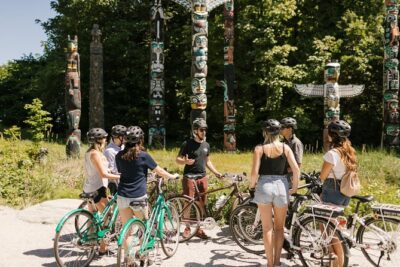
The Stanley Park Bicycle Tour by Cycle City Tours
Read our review →

Sunset Bus Tour: Stanley Park & English Bay Photostops
Read our review →Browse the lists this tour appears in